
 Connect Sign In



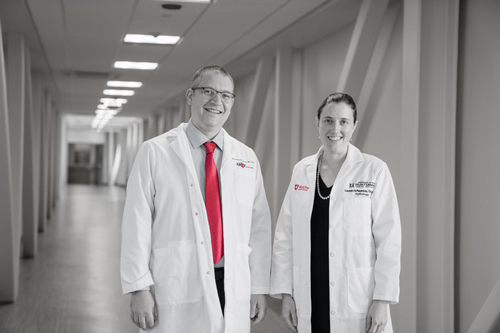



Physician, educator, and mentor Kristi Smock, MD, was recognized as a 2026 Utah Business Healthcare Hero for advancing patient care and shaping future healthcare leaders.
ARUP’s inclusion in the Redtail AI Factory’s second challenge project cohort will accelerate development of an AI foundation model designed to enhance analysis of clinical flow cytometry data.
Teofilo was recognized for her leadership and innovation in healthcare technology, which are inspired by personal experience and a commitment to patient care.
During Newborn Screening Awareness Month, explore updated ARUP Consult® resources that support follow-up testing and diagnosis for conditions identified through newborn screening.
A newly published epidemiologic study provides evidence for a previously unrecognized transfusion risk for patients with alpha-gal syndrome, an allergic condition that can develop after a tick bite.
The seven-part article series explores key provisions of the Enhancing CLIA Act and is intended to encourage thoughtful discussions about the future of regulating laboratory-developed tests.
ARUP Laboratories’ Infectious Disease Test Positivity Trends Dashboard now includes Cyclospora data to help clinicians and public health professionals monitor the rising cyclosporiasis outbreak.
ARUP CLARISPECT™ Multiple Myeloma MRD by Spectral Flow Cytometry characterizes neoplastic populations with greater confidence and sensitivity, while minimizing specimen volume requirements.
Karen Brisendine, the last of ARUP’s original 100 employees, retired after 42 years. Her career spanned multiple departments, reflecting a legacy of learning, adaptability, and service.
ARUP employees helped grant a Make-A-Wish® Utah child’s dream, transforming a lab into a supervillain’s playground and bringing joy to a family and community.
