
 Connect Sign In









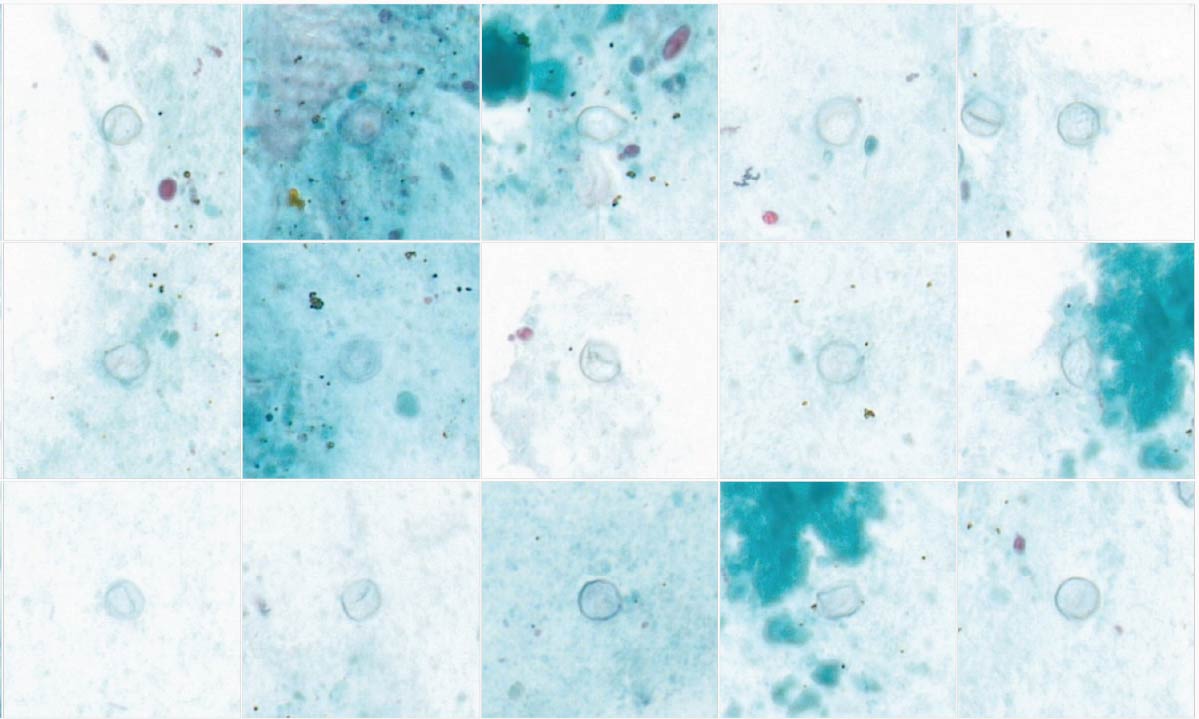
Cyclospora are notoriously difficult to detect by traditional microscopy methods. ARUP offers robust, artificial intelligence (AI)-enhanced testing that can help providers diagnose cyclosporiasis and respond to current outbreaks.


Cyclosporiasis cases have recently surged across the United States. As the only laboratory to use an artificial intelligence (AI)-enhanced platform to screen modified acid-fast stains and the entire ova and parasite (O&P) exam process, ARUP Laboratories is uniquely positioned to help health systems and communities address these outbreaks.
“ARUP has built a robust, sensitive, and efficient assay that quickly provides results to clinicians that are needed to diagnose and treat infections such as cyclosporiasis,” said Blaine Mathison, BS, M(ASCP), technical director of Parasitology at ARUP.
Cyclosporiasis is an infection caused by parasites in the genus Cyclospora. Symptoms of cyclosporiasis include prolonged and watery diarrhea, loss of appetite, weight loss, bloating, and fatigue. Cyclosporiasis results from ingesting contaminated water or produce.
ARUP was the first reference laboratory to implement an AI-screening algorithm to assist in the detection of human gastrointestinal parasites in trichrome-stained slides in 2019. The technology was expanded to include the detection of Cyclospora in modified acid-fast-stained slides in 2021 and wet mounts in 2025.
“Our validation studies have demonstrated that AI-enhanced screening of stool specimens improves sensitivity significantly when compared to human analysis alone,” Mathison said.
As of July 13, 2026, the Michigan Department of Health and Human Services had reported 2,640 cases of cyclosporiasis. Of those cases, 44 required hospitalization. As of July 9, 2026, the CDC had reported that cases had occurred in 31 states.
Cyclospora is notoriously challenging to detect via standard O&P exams, such as trichrome and wet-mount stains. The oocyst, the immature stage of Cyclospora, may be shed in stool in very limited numbers, preventing it from being readily detected. The standard trichrome stain used to distinguish parasites generally does not penetrate the oocyst wall. Instead, a special stain, known as a modified acid-fast stain, is used to more clearly indicate Cyclospora oocysts.
“While the increased sensitivity of ARUP’s AI-based screening has made it possible to detect Cyclospora with the routine O&P exam, the best method to detect Cyclospora is the modified acid-fast stain,” Mathison said.
Providers can access more information about appropriate test selection for infectious diarrhea on ARUP Consult®, a free laboratory test selection support tool with more than 2,000 lab tests categorized into disease-related topics and algorithms.
The Journal of Clinical Microbiology also recently published ARUP’s research, which found that the AI-based wet mount platform has increased detection rates for helminth (worm) infections, such as pinworm.
Review these additional resources to learn more:
- Ova and Parasite Testing
- ARUP Study Finds Artificial Intelligence-Based Wet Mount Screening Platform Increases Helminth Detection
- Journal of Clinical Microbiology Publishes Article on ARUP’s Validation of AI for Parasite Detection
- ‘The Biggest Advancement in Parasite Screening Since the Microscope’: Leveraging Artificial Intelligence Improves Diagnosis
Kellie Carrigan, kellie.carrigan@aruplab.com
