 Connect Sign In






Applied Artificial Intelligence and Bioinformatics Division
We collaborate with you to turn complex biomedical data into scientific breakthroughs, delivering the tools and technology you need to succeed.
Artificial Intelligence-Powered Precision for Real-World Impact
With deep experience in large language models, machine learning, image analysis, and statistical modeling, our team transforms complex biomedical data into actionable tools for diagnostics, research, and operational decision-making. What sets us apart is our ability to collaborate across scientific, engineering, and clinical teams, bridging the gap between innovative algorithms and real-world applications. Our data scientists bring technical precision and biomedical context to help you succeed.
Digital Pathology Capabilities

Digital Pathology and Image Analysis
Using advanced algorithms and artificial intelligence (AI) models, we develop solutions that support automated tissue classification, biomarker quantification, and diagnostic augmentation from whole-slide images (WSIs).

Predictive Modeling
From disease progression forecasting to test utilization optimization, our predictive analytics help clients make informed decisions backed by data.

Custom Algorithm Development
Whether they are deep learning models for rare disease or rule-based engines for lab operations, we design and validate tailored tools to meet unique clinical needs.

Data Integration and Interpretation
Our team excels at unifying structured and unstructured data—from genomics and lab results to electronic medical record (EMR) and imaging data—into coherent models that drive insight and impact.

Translational Research Support
We partner with pharmaceutical and biotechnology clients to support biomarker discovery, companion diagnostic development, and clinical trial analytics.
Technical Infrastructure To Drive Innovation
We build the technical infrastructure that powers some of the most ambitious innovations in clinical diagnostics. Whether we’re designing a distributed microservice system, solving complex visualization challenges, or deploying a deep learning model into a production environment, we help labs operate more efficiently and enable faster, more accurate diagnosis.
Software Development Capabilities

Production-Grade Applications
We design and maintain production-grade, cloud-based tools and web applications to enable clinicians and researchers to visualize, analyze, and interact with large-scale WSIs and complex pathology datasets.

Robust Pipelines for Medical Imaging Data
We develop robust pipelines for ingesting, storing, and serving gigapixel pathology images. From high-throughput slide viewers to scalable annotation platforms, our systems are built to handle the size, sensitivity, and nuances of medical imaging data.

Lab Workflow Integration
We translate machine learning research into deployable tools. We write software to support model training and validation, build application programming interfaces (APIs) to serve inference results, and integrate these capabilities directly into lab workflows.

Seamless Data Exchange
We engineer custom interfaces to vendor-specific hardware (e.g., scanners, lab instruments, and digital imaging systems) to ensure seamless data exchange across the broader ecosystem.
About the ARUP Applied AI and Bioinformatics Division
We work at the forefront of biomedical innovation, building tools and technologies that transform the way diagnostics, research, and patient care are delivered. Whether we are developing advanced AI for digital pathology or creating scalable software to power the next generation of lab testing, we push the boundaries of what’s possible. We build solutions that span disciplines from pathology image analysis to genomics, flow cytometry, infectious disease, and more.
We’re a multidisciplinary group of engineers, data scientists, medical experts, and innovators who believe the best solutions come from teams that are curious, collaborative, and mission driven.
We thrive in ambiguity, push technical boundaries, and operate with scientific rigor. And we do all of this to support patients, clinicians, and researchers who rely on trusted answers.
Portfolios and Publications
Castleman Disease Education Portal
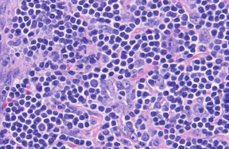
We’re collaborating with Recordati Rare Diseases to advance the understanding, diagnosis, and treatment of idiopathic multicentric Castleman disease (iMCD), a rare and often misdiagnosed lymphoproliferative disorder. Through this partnership, we are delivering a comprehensive suite of educational resources, AI-powered diagnostic tools, and actionable research insights to support clinicians and researchers.
In close collaboration with leading medical experts in Castleman disease, our team has developed and is promoting a standardized diagnostic framework aimed at increasing accuracy and consistency across the medical community. Our data scientists have developed a state-of-the-art AI model that analyzes digitized histopathology slides to objectively grade iMCD severity, aiding pathologists in their clinical assessments.
To support knowledge sharing, our engineers created an interactive educational website that offers up-to-date information on Castleman disease, detailed tutorials on the grading process, and real-world case studies to enhance hands-on learning.
Pramana Hematopathology AI
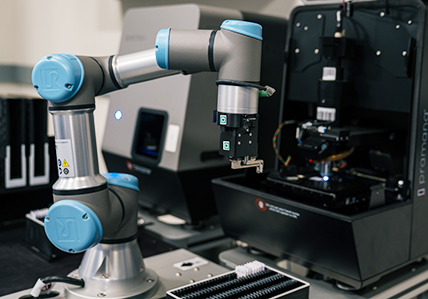
Using the latest scanning technology from Pramana, we are developing AI tools to improve diagnostic accuracy and workflow efficiency through the digitization of complex tissue specimens and the development of novel machine learning algorithms. This partnership focuses on one of the most challenging domains in anatomic pathology—bone marrow biopsy interpretation—for which traditional diagnostic methods are limited by variability, complexity, and throughput constraints.
Pramana’s SpectralHT scanners, equipped with edge-based AI computing, are deployed to digitize hematopathology slides at scale with volumetric fidelity and real-time quality control. These scanners generate high-resolution images suitable for algorithmic interrogation while simultaneously streamlining slide processing through autonomous imaging and in-line analysis.
Leveraging ARUP’s domain expertise in hematopathology and robust digital infrastructure, the Research and Innovation (R&I) team leads the design, annotation, and development of AI models that assist with diagnostic interpretation. This includes curating and labeling large-scale, real-world datasets using expert-reviewed clinical cases, training deep learning models to recognize morphological patterns, and optimizing them for on-device execution. By integrating model inference directly into the scanner workflow, the team is enabling near real-time decision support at the point of image acquisition.
This collaboration illustrates the practical convergence of clinical-grade AI and digital pathology systems. It exemplifies how domain-informed algorithm development, combined with scalable edge deployment, can enhance diagnostic precision, reduce interobserver variability, and drive efficiency in routine and specialized pathology workflows. The initiative also serves as a foundation for future commercialization, with models developed for seamless integration into laboratory environments in alignment with evolving regulatory pathways.
Through this work, ARUP and Pramana are redefining diagnostic workflows in hematopathology and setting new standards for AI-enabled clinical diagnostics.
Jalapheno
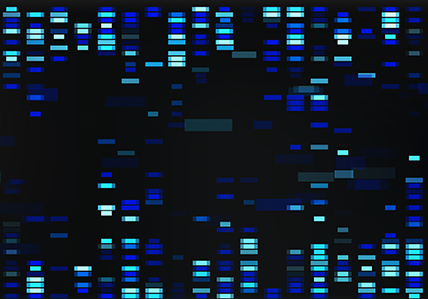
Jalapheno helps medical directors and clinical variant scientists analyze whole genomes and exomes rapidly. Modern genome sequencing can identify millions of sequence variants in an individual, but finding which ones are medically relevant is a complex and time-consuming task. A single genome can sometimes require hours of manual review and research to accurately characterize the variants. The Jalapheno algorithm makes this task easier by identifying which genes in the genome are most likely to be associated with the clinical findings for a patient. Using these results, scientists can focus their efforts on areas of the genome most likely to be associated with the patient’s individual condition. By filtering down the millions of variants to just a few, Jalapheno helps patients receive accurate results faster. The algorithm works by combing public databases and journal articles to find information about clinical disease symptoms, or phenotypes, and genes known to be associated with them. Jalapheno then assembles millions of these data points into a large graph of gene-phenotype associations, structured in a way to make searches extremely fast. Today, Jalapheno is used in clinical genome and exome workflows at ARUP to help patients get accurate results faster.
Aide
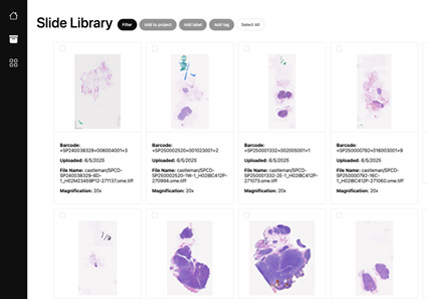
Aide is a cloud-based annotation and collaboration platform designed to streamline the curation and analysis of WSIs for research and diagnostic development. Built specifically for the unique demands of digital pathology, Aide enables distributed teams of pathologists, scientists, and engineers to collaboratively annotate, tag, and manage large-scale WSI datasets with efficiency and precision.
Aide supports project-based workflows, allowing users to create and share collections of WSIs across teams. Within these projects, users can generate structured annotations, apply customizable metadata tags, and search across slides using tag-based and contextual filters. The platform’s web-based interface allows seamless access across institutions, making it ideal for multisite collaboration and remote expert review.
By centralizing annotation efforts in a secure, cloud-native environment, Aide addresses a critical bottleneck in AI development pipelines: the creation of high-quality, expert-labeled training data. The system is designed to maintain annotation fidelity, facilitate interobserver consensus, and ensure metadata consistency—all essential components for the reproducibility and scalability of machine learning workflows.
Aide’s modular architecture also supports downstream integration with AI model training, data versioning, and digital pathology viewers, making it a cornerstone in the broader ecosystem of ARUP’s digital pathology infrastructure. Whether supporting internal research projects or external collaborations, Aide is accelerating the development of clinically relevant AI tools by enabling efficiency and turning high-resolution insights into complex tissue-based datasets.
Applied AI and Bioinformatics Team
Leadership
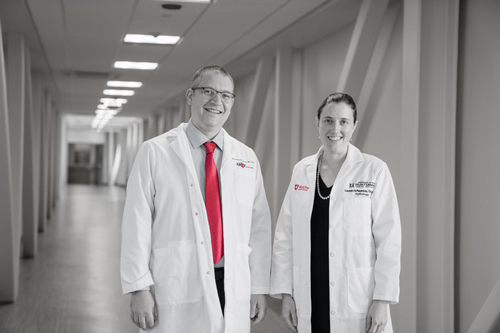
Meet Our Innovation Leaders

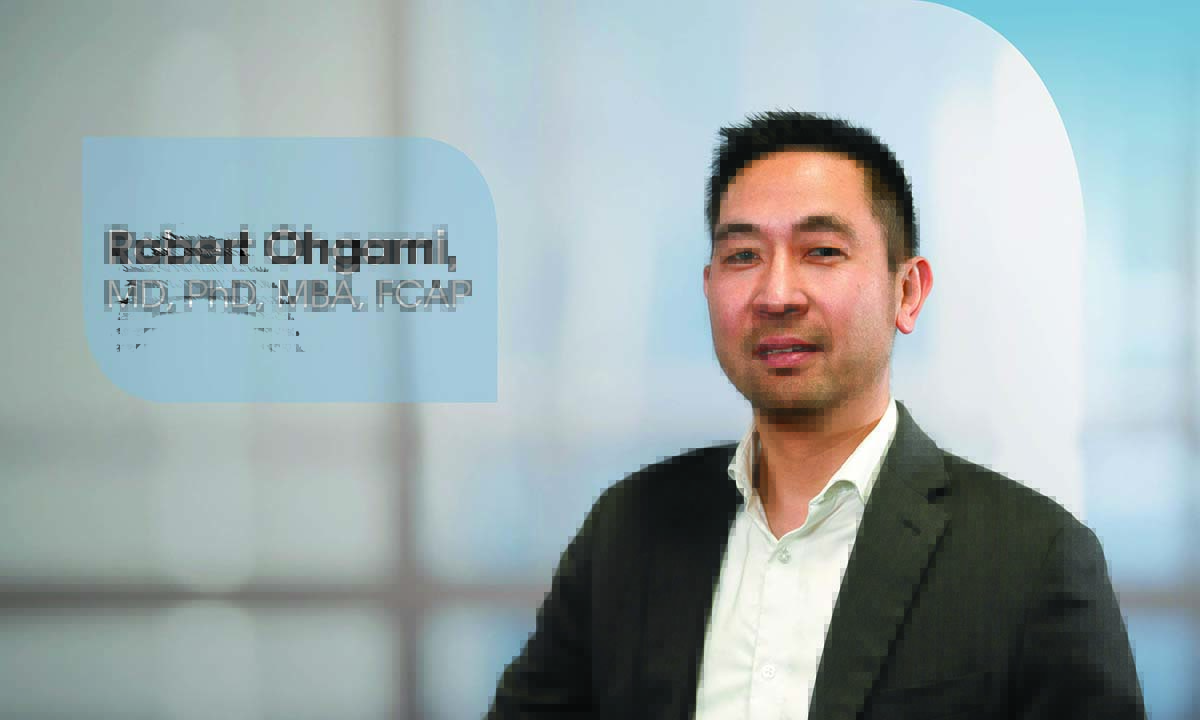
Robert S. Ohgami, MD, PhD, MBA, FCAP
Vice President, ARUP Institute for Research and Innovation in Diagnostic and Precision Medicine™
Medical Director, Hematopathology

David P. Ng, MD, FCAP
Medical Director: Hematopathology, Hematologic Flow Cytometry, Applied Artificial Intelligence and Bioinformatics