
 Connect Sign In


Building a Robust Newborn Screening Program


When Marzia Pasquali, PhD, FACMG, joined ARUP Laboratories in 2001, the state of Utah only included five conditions in its newborn screening program.
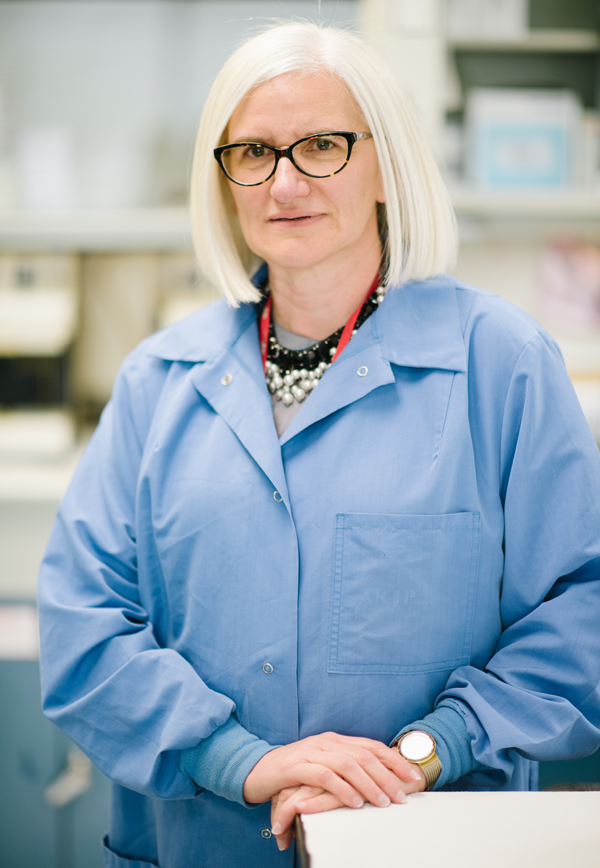
Pasquali, medical director of Biochemical Genetics at ARUP, initiated a pilot project in collaboration with the Utah Department of Health and Human Services (DHHS) and the University of Utah Metabolic Clinic. Its goal: to expand the newborn screening program and adopt a more efficient testing technology, known as tandem mass spectrometry.
The project aimed to combine the strengths of each organization to build a robust program that not only identified affected patients but ensured appropriate follow-up care.
“ARUP and the Biochemical Genetics Lab know how to run the mass spectrometer and interpret the results, while the DHHS has an amazing follow-up program, and the clinic does a marvelous job in taking care of the patients. I thought, let’s put our heads together and build a program,” Pasquali said.
Tandem mass spectrometry, the new technology Pasquali proposed, has the capacity to simultaneously measure many analytes with a high degree of specificity and sensitivity. Additionally, it requires only a small sample size, which is ideal when drawing blood from a newborn baby. Tandem mass spectrometry can detect markers for up to 70 conditions simultaneously and can return results within a few hours.
“Turnaround time is a very important consideration in newborn screening,” said Pasquali. “For some conditions that are critical, symptoms can develop within 48 to 72 hours. To prevent a complication, the morbidity associated with a disease, or even mortality, you need to be very fast.”
Several other important considerations affect which diseases are included in a newborn screening panel, such as whether a marker of the disease can be identified in asymptomatic patients and whether the disease has a treatment, said Pasquali.
ARUP validated the screening by tandem mass spectrometry, and the expanded and improved newborn screening program launched on January 1, 2006. ARUP performed the testing until 2019, by which time the DHHS had the capability to run tandem mass spectrometry.
Since that time, Pasquali has continued to advocate for newborn screening and has worked to expand the number of diseases in the screening panels. Her efforts have included groundbreaking work on guanidinoacetate methyltransferase (GAMT) deficiency, and she worked closely with Heidi Wallis, the mother of two children diagnosed with the deficiency, to improve screening for the condition.
GAMT deficiency leads to a lack of creatine in the brain, a condition that can be treated with a creatine supplement. Without diagnosis and treatment, the deficiency results in lifelong damage, including intellectual disability, limited speech development, recurrent seizures, and autistic-like behavior.
In 2015, Utah became the first state to begin screening for GAMT deficiency in all newborn infants. A few years later, in 2021, Woodward Tribe became the first infant diagnosed with GAMT deficiency through Utah’s newborn screening program. As a result of his early diagnosis, Woodward, or Woody, as he is called, was able to receive timely treatment that significantly improved his outcome.
Through Pasquali’s efforts and those of her collaborators, Utah has expanded the number of diseases in its newborn screening program from five to 35.
While rapid whole genome sequencing (rWGS) has demonstrated the potential to diagnose newborns being treated in the neonatal intensive care unit (NICU) who appear to have a genetic disorder, Pasquali believes that traditional newborn screening will continue to meet an important need in screening the entire newborn population for critical metabolic disorders.

Diagnosing Critically Ill Newborns: The Evolution of Testing and the Promise of Rapid Whole Genome Sequencing
The prenatal ultrasound revealed enlarged echogenic, or unusually bright, kidneys, polydactyly, and club feet that curved inward. ... Continue reading
