 Connect Sign In



Leveraging Artificial Intelligence To Solve Diagnostic Challenges: ARUP Laboratories “Expands the Horizon of What Is Possible”


Robert Ohgami, MD, PhD, MBA, FCAP, has spent years learning to recognize and grade the histologic features of Castleman disease. Throughout his career, he’s reviewed thousands of cases. Now, with access to a relatively small dataset of annotated slides, an applied artificial intelligence (AI) model can be trained to grade Castleman disease in a fraction of the time it takes a human to become an expert.
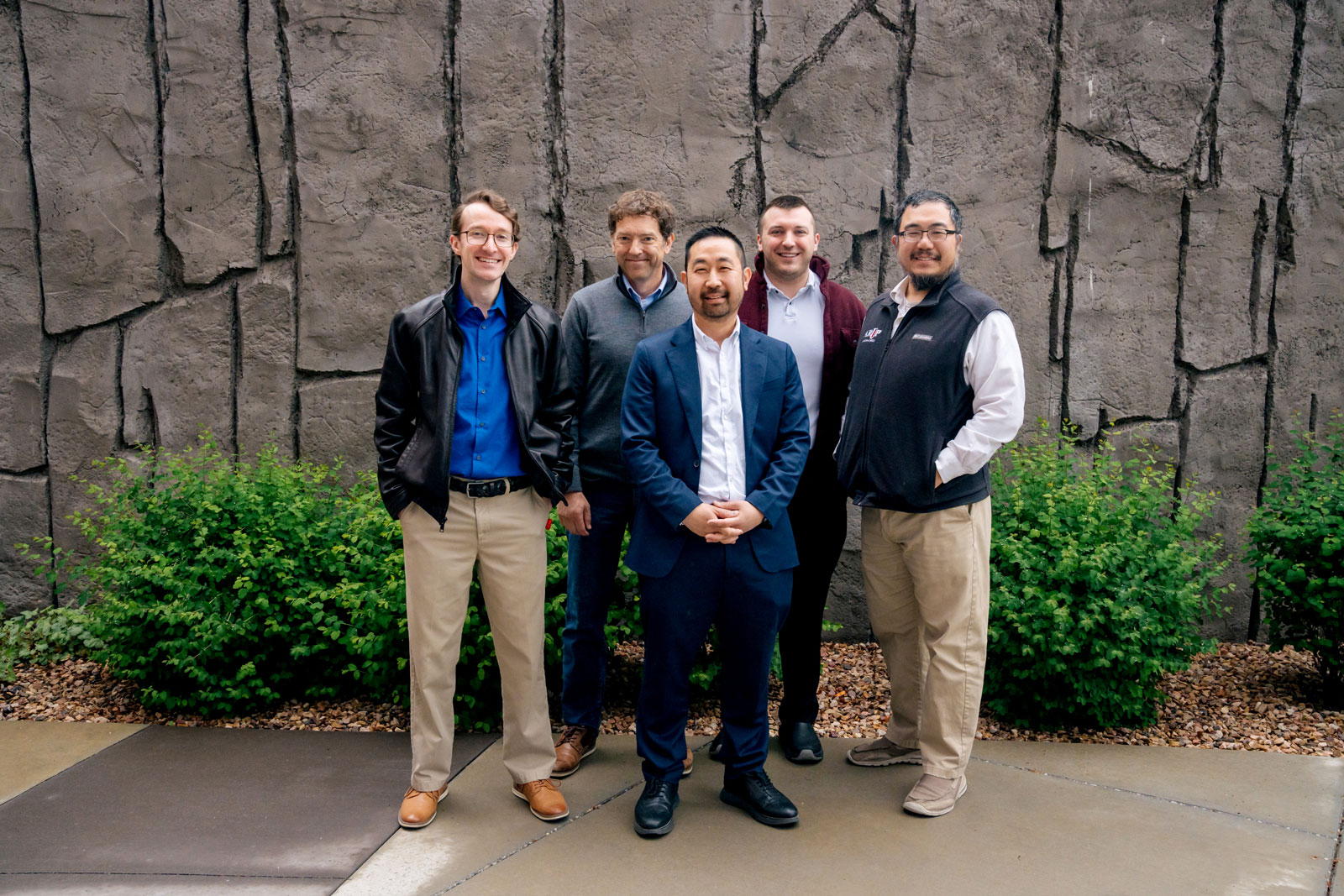
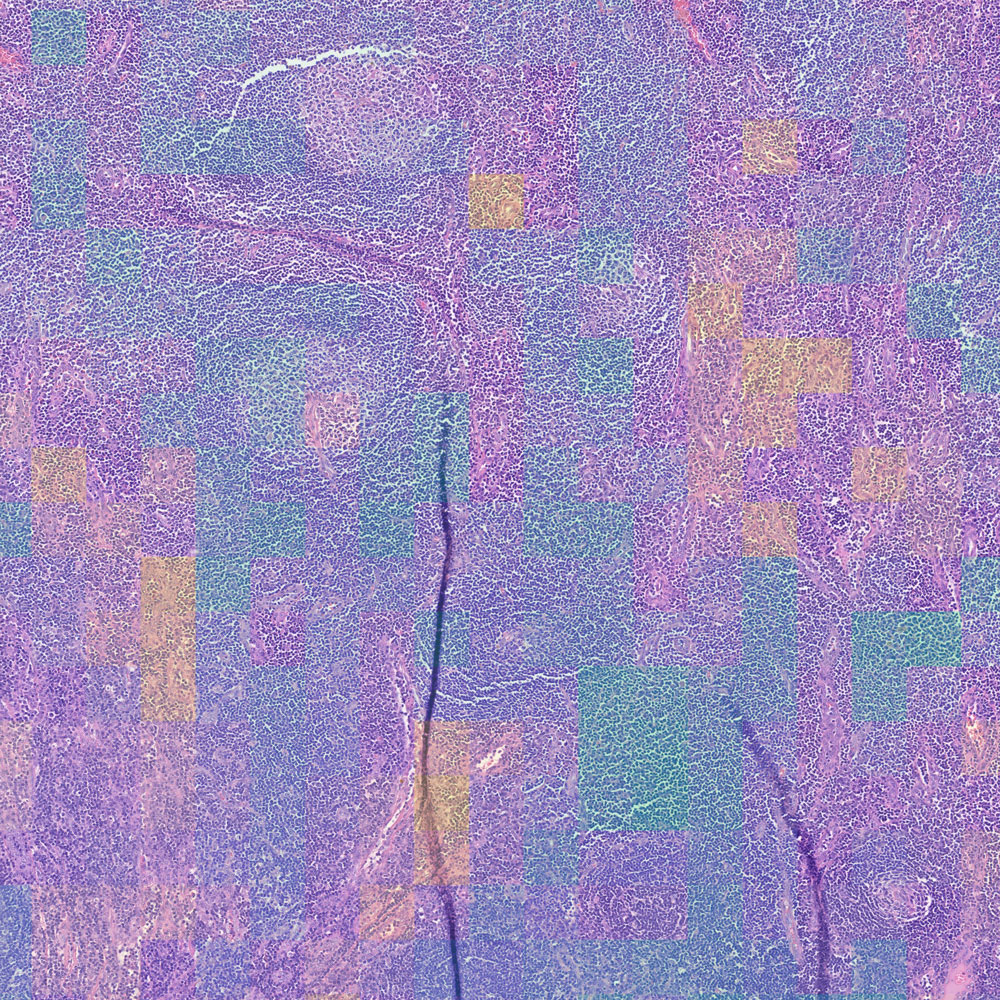
Ohgami, vice president of the ARUP Institute for Research and Innovation in Diagnostic and Precision Medicine™ and medical director of Hematopathology, is working closely with the ARUP Applied AI and Bioinformatics teams to develop a multiple-instance learning AI model, a type of model that can extrapolate patterns from coarsely labeled data, to replicate his annotations.
Castleman disease, which leads to an overactive immune system, can result in enlarged lymph nodes, chronic inflammation, and organ damage. Depending on the severity and type of disease, symptoms can range from mild to severe. In multicentric forms, which affect multiple body regions, symptoms can be life-threatening and include fever and organ enlargement, Ohgami said. Multicentric forms can also cause severe immune reactions, known as cytokine storms, in which excessive quantities of cytokines—proteins that regulate immune response—are released and may lead to organ dysfunction or failure.
The diagnosis of Castleman disease is particularly complex. It’s not only rare, but it also mimics many other diseases, such as lymphomas and autoimmune diseases. Some pathologists may only see a few cases throughout their entire careers.
“It’s difficult even for trained pathologists to recognize, especially if they’re not doing this all day, every day,” Ohgami said.
In their studies, the team has found that grading varies significantly among pathologists and even when performed by the same individual, who might grade a slide differently on subsequent reviews.
Because grading Castleman disease is so complex, and the expertise necessary to grade it is rare, creating an automated solution requires advanced machine learning techniques. While traditional machine learning requires large datasets of labeled data, which an expert hematopathologist needs to manually annotate, an AI model can identify patterns in unlabeled data and then generate its own labels, a method known as self-supervised learning. This technique more closely resembles the way humans learn. By leveraging large unlabeled datasets, the self-supervised model can then learn to grade Castleman disease with only a small labeled dataset.
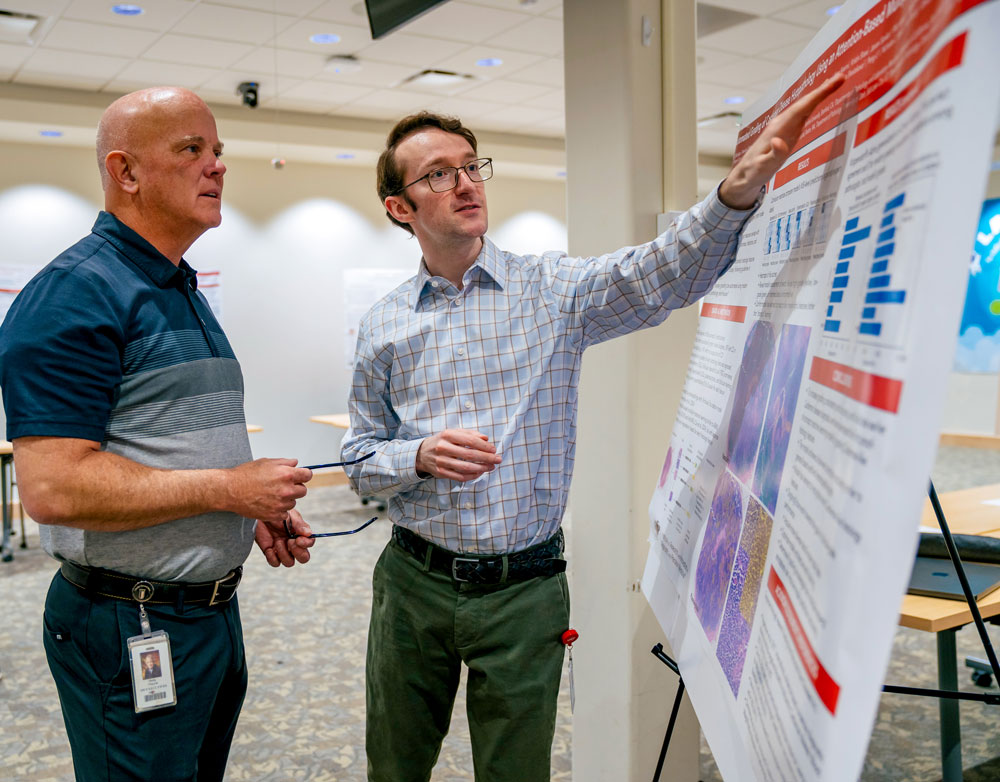
“It’s easy to label cat photos on the internet; anyone can do that,” said Muir Morrison, PhD, a research data scientist who has been deeply involved in AI development at ARUP. “Labeling medical data requires an expert who has years of training and experience. Their time is precious and expensive.”
Validation studies have demonstrated that the model outperforms most pathologists and the results are more reproducible, Ohgami said. The model will give the same grade each time it reviews a slide, unlike humans, whose results may vary.
While AI models can augment human expertise and, in some cases, compute results more quickly and consistently, an AI model doesn’t eliminate the need for human experts who have in-depth knowledge of disease diagnosis.
“These neural nets, at best, can perform at the level of high human expertise,” Morrison said. The model’s performance is measured and refined by the labeled data Ohgami provided.
Morrison presented on the team’s development of the model and their evaluation of its performance at the 2025 American Society of Hematology Annual Meeting and Exposition.
“The goal is to build a tool widely available to clinicians who don’t have that same level of experience,” Morrison said. “By doing so, we will be able to identify more patients who would have been misdiagnosed previously or slipped through the cracks entirely.”
For patients who have Castleman disease, especially in its severe forms, early and accurate diagnosis can drastically alter the course of their journey and disease progression.
“With early recognition, which typically requires a multidisciplinary team, and with targeted therapies, we’ve transformed iMCD [idiopathic multicentric Castleman disease] from a dire condition to one with which patients can live for decades,” Ohgami said. “It’s been a long but satisfying journey, bridging basic science, genomics, digital pathology, and now AI, ultimately translating innovation into patient care.”
Chipping Away at Marginal Operational Inefficiencies
Grading of Castleman disease is just one area in which ARUP has explored the potential of applied AI to improve laboratory medicine. Within the Hematologic Flow Cytometry Laboratory, ARUP teams have developed AI tools that will increase efficiency and deliver results to providers and patients more quickly.
“The field of clinical AI has been focused on ‘swing for the fences’ type diagnostics, but there are hard problems with what I would term a poor signal-to-noise ratio,” said David Ng, MD, FCAP, ARUP medical director of Hematopathology, Hematologic Flow Cytometry, and Applied AI and Bioinformatics. “Rather than charge headfirst into this category of problems, we’ve focused our efforts on easy tasks that, in aggregate, take up a big chunk of the day.”
The lab has deployed an AI model that analyzes flow cytometry cases for those that are likely acute, such as acute myeloid leukemia (AML), an aggressive form of cancer that requires urgent intervention. When pathologists log on to review cases, the software displays potential AML cases at the top of their queues and flags them as urgent. The team’s findings and validation were published in Cytometry Part B: Clinical Cytometry.
“This allows pathologists to pay attention to the most critically ill patients, which is a great gain for patient care,” Ohgami said.
That’s just the beginning. Teams at ARUP are already working to add increased functionality to the AI model. One example is use of the model to identify markers for further investigation of abnormal cell populations. Normally, a flow cytometry technologist manually reviews initial results to determine which markers need to be evaluated next. Instead, the AI model will automatically determine which testing should be performed next, minimizing the time it takes to complete all necessary testing and make a diagnosis.
“We can usher cases into the correct diagnostic pathway more quickly, which shrinks the amount of time that a sample spends in the testing process,” said Brendan O’Fallon, PhD, ARUP director of Bioinformatics.
“For patients, this means they don’t have to spend additional days worrying, wondering, ‘Am I sick? Do I have cancer?’” Ohgami said.
The AI model will also streamline laboratory workflows by screening for normal cases and moving them more quickly through the testing process. For conventional flow cytometry testing, each case is reviewed by a technician and a pathologist. With the implementation of an AI screening tool, cases that are predicted to be normal can bypass part of the additional review process and be sent directly to the pathologist.
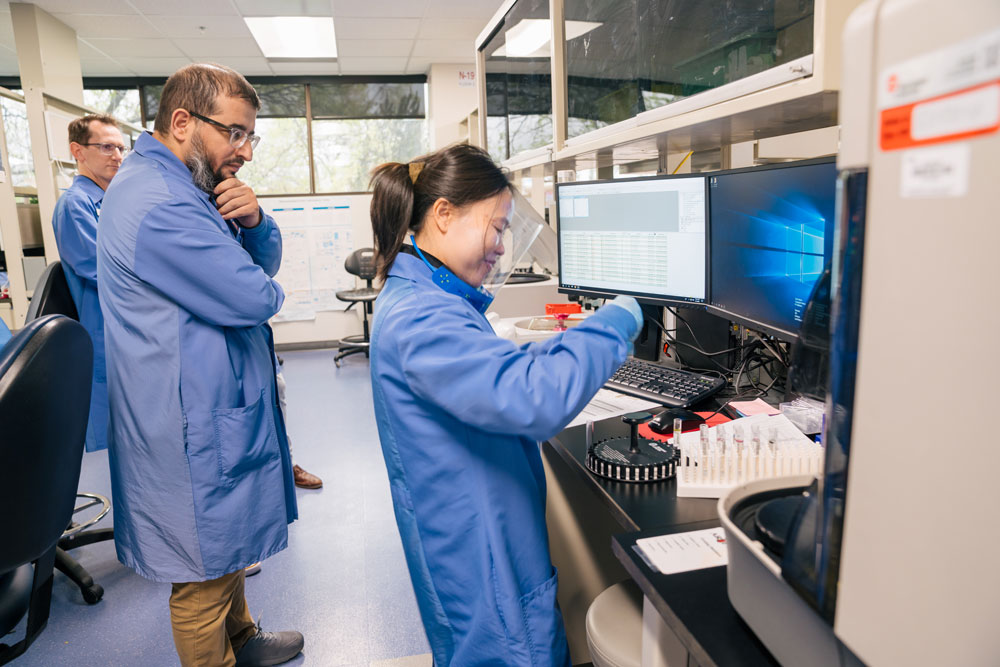
“AI tools are not used to make a diagnosis,” said Aimal Aziz, MHA, MLS(ASCP), CLSSGB, supervisor of ARUP’s Hematologic Flow Cytometry Laboratory. “Instead, they can expedite the process of acquiring the necessary data that a pathologist needs to determine the result.”
Identifying and filtering out normal cases earlier in the testing process will allow laboratory staff to devote more time and effort to analyzing abnormal cases, which enables increased scrutiny of results that will have an impact on treatment decisions.
“We can likely identify at least 50% of the normal cases with a super low risk of misclassification,” O’Fallon said.
“Each step in a testing process, from collecting a sample to getting a result out the door, can be augmented by AI in some way,” Ohgami said. “We’re chipping away at marginal operational inefficiencies to improve laboratory processes, increase capacity, and return results faster.”
Human in the Loop: Using AI Safely and Effectively
Building the AI models themselves is only one step of a highly complex undertaking. Ensuring that the AI solves real operational problems without compromising quality is also crucial.
“We’re very thoughtful about how we approach AI. The fundamental question we ask is whether it’s going to make a difference in patients’ lives,” said Nicholas Spies, MD, ARUP medical director of Applied AI and Clinical Chemistry.
Spies, who also serves on the College of American Pathologists (CAP) Artificial Intelligence Committee, is at the forefront of developing general practice guidelines as AI applications rapidly evolve.
“It will take some time to battle test all these systems to build robust governance structures and sound frameworks for evaluating and deploying these tools,” Spies said.
At ARUP, each AI model undergoes a rigorous validation process, including both an analytic and a functional validation, to ensure it performs as intended.
“As part of our validation plan, we establish performance thresholds that must be met before the model is ready for production,” said Mark Dewey, MS, AI engineering manager in the Applied AI and Bioinformatics group at ARUP.
Once validated, the AI model is frozen and no longer permitted to adapt so that it will adhere to the expected performance parameters. Further iterations to improve the AI model undergo additional validation.
“We’re innovating but in a very conservative way. None of the models we’ve deployed fully automate any process without pathologist review,” Spies said. “Even in the most operationally efficient model, a human being is still involved. We call it ‘human in the loop.’”
Expanding the Horizon
While AI has enormous potential to augment processes and create efficiencies, operating an effective laboratory still relies on the ingenuity of skilled laboratory professionals.
“If anything, AI should remove the more tedious tasks, making work more vibrant,” Dewey said. “As machine learning continues to advance, we will see this proliferation of possibilities.”
Efforts such as automating the grading of Castleman disease would have been impossible even a few years ago. With more advanced machine learning techniques, solutions that would have been a mere pipe dream are now possible.
“The extent of the good we can do by being experts in our own sphere of medicine will only get us so far. By applying what I know of pathology with what I know about AI, I hope to expand the horizon of what is possible for patient care,” Spies said.

Grading Castleman disease
An attention-based multiple-instance learning model grades Castleman disease by dividing a hematoxylin and eosin (H&E)-stained whole slide image into tiles and then scoring each tile based on the density of features such as vascularity and plasmacytosis. Grades range from 0 to 3 (correlating approximately with normal, mild, moderate, and severe). Green indicates a lower grade, whereas yellow corresponds with a higher grade.