
 Connect Sign In


From Curiosity to Confidence: Grace Kroner’s Path Through Laboratory Medicine


Grace Kroner, PhD, didn’t set out with a clear plan to pursue laboratory medicine. Like many in the field, she found her way there through a series of small moments: conversations, mentors, and experiences that quietly shaped her trajectory.
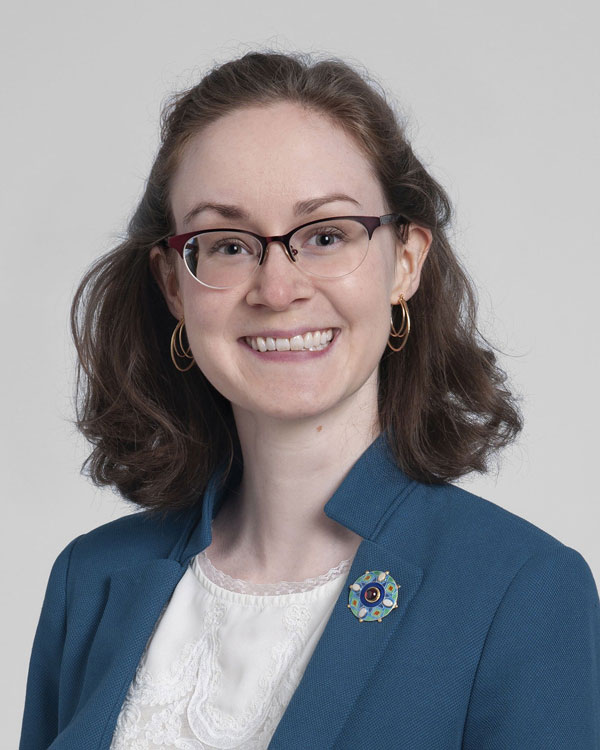
Grace Kroner, PhD, didn’t set out with a clear plan to pursue laboratory medicine. Like many in the field, she found her way there through a series of small moments: conversations, mentors, and experiences that quietly shaped her trajectory.
One of the earliest sparks came unexpectedly during a visit home from college, when someone at her church mentioned a graduate from her university who was working in clinical chemistry. That conversation led her to meet a clinical chemistry fellow who introduced her to a field she hadn’t previously considered. As she progressed through her graduate school program in biological chemistry and spoke with others in the field, Kroner decided that clinical chemistry was the route she was going to take.
Discovering ARUP and the Fellowship Experience
Kroner hadn’t heard of ARUP Laboratories before committing to clinical chemistry and entering the field, but once she had, its reputation stood out. The opportunity to train at a nationally recognized reference laboratory, alongside experienced medical directors across a range of specialties, was hard to pass up.
During her clinical chemistry fellowship from 2018 to 2020, and while serving as assistant medical director in the Manual Endocrinology Laboratory from 2019 to 2020, Kroner worked on projects spanning toxicology, endocrinology, and laboratory stewardship that involved interference studies, data analysis, and review of quality metrics. Through these experiences, she gained an appreciation for the complexity behind laboratory results and the responsibility for providing accurate, clinically meaningful data.
Equally important to Kroner was the structure of ARUP’s training environment, which helped her grow from someone new to clinical chemistry into a professional prepared to step into a medical director role. Gradually learning how to take calls, answer clinical questions, and lead projects helped build both her technical knowledge and confidence. The support of mentors and the culture of collaboration made that growth possible.
From Fellow to Medical Director
Transitioning from fellowship to practice brought its own challenges. Being the one responsible for final calls rather than having her decisions reviewed required a shift in mindset. Kroner credits her experience at ARUP for building her internal confidence because she encountered many different scenarios and learned how to approach them. She recalls that one of the most valuable lessons was “seeing the collaboration between medical directors and learning that it’s okay not to have every answer and that we should ask each other questions.”
Now the medical director of Send-Out Testing and Automated Chemistry at Cleveland Clinic, Kroner initially served as Cleveland Clinic’s associate director in Special Chemistry, where she applied the esoteric testing knowledge she had developed during her fellowship. She later took responsibility for overseeing referral testing, an area where stewardship became a central focus. Ensuring appropriate test utilization—balancing access with quality—has become a defining aspect of her work. “I’m so happy that I did my fellowship at ARUP and had the exposure to a little bit of this, a little bit of that, and although I’m by no means the expert on some of those other areas, I at least have a foundation so that I can know what questions to ask,” Kroner said.
Kroner’s interest in stewardship dates back to her time at ARUP, where she participated in projects examining testing practices and efficiency. In her current role, she continues that work, navigating the complexities of a large health system with multiple draw sites and varying workflows. Her responsibilities recently expanded to include oversight of Automated Chemistry.
Looking Ahead in Laboratory Medicine
Looking ahead, Kroner sees laboratory medicine continuing to evolve, particularly through advances in data analytics and biomarker discovery. The recent development of tests for plasma-based Alzheimer’s disease biomarkers has caught her interest, as they illustrate how innovation can make testing less invasive and more accessible for patients. Even as new technologies emerge, she believes the core of the field will remain the same: thoughtful application of science in the service of patient care.
Advice for Future Fellows
For others considering a fellowship, Kroner encourages them to take full advantage of the opportunities available, both professionally and personally. Exposure to diverse projects and specialties can be invaluable, and learning from different mentors helps shape one’s own approach to leadership. She also emphasizes the importance of experiencing life outside the lab. During her time in Utah, she explored hiking and concerts and even learned skate skiing, experiences that made the intense years of training more balanced and memorable.
Ultimately, Kroner reflects on her fellowship as a period of significant growth, not just as a scientist, but as a person. The skills, confidence, and perspective she gained continue to shape her work as a medical director today. Her journey serves as a reminder that laboratory medicine often draws people in quietly—and then becomes the pursuit of a lifetime.
I’m so happy that I did my fellowship at ARUP and had the exposure to a little bit of this, a little bit of that, and although I’m by no means the expert on some of those other areas, I at least have a foundation so that I can know what questions to ask.”
Grace Kroner, PhD
ARUP Alumni Spotlight

ARUP is seeking news from former fellows and residents to feature!
Fill out our form to share your news or nominate a colleague, and a representative from ARUP will follow up with you by email.
