
 Connect Sign In




How Plasma pTau 217 Is Changing the Diagnostic Approach to Alzheimer’s Disease


The Alzheimer’s Association estimates that more than 7 million Americans 65 years or older are currently living with Alzheimer’s disease (AD), and the number is projected to more than double by 2050. As prevalence rises and the demand for neurologic care outpaces the supply of specialists, clinicians face a growing need to evaluate patients earlier and more efficiently.
Fortunately, advances in biomarker science are reshaping how AD is diagnosed. In a new white paper, experts from ARUP Laboratories offer guidance to help ensure clinicians are ordering tests for the most accurate biomarkers of the disease and that the tests they choose support clinical decision-making.
The white paper, “Clinical and Analytic Considerations for Selecting a Plasma Phosphorylated Tau 217 (pTau 217) Test: A Laboratory Perspective for Neurologists,” focuses on phosphorylated tau 217 (pTau 217), which over years of comparative research has emerged as one of the most informative biomarkers for AD because it can be detected in plasma fairly early in the disease process, often before measurable cognitive decline is evident.
The paper, authored by Kelly Doyle, PhD, DABCC, FADLM, ARUP medical director of Special Chemistry, Endocrinology, and Mass Spectrometry, and Heather Nelson, PhD, DABCC, ARUP medical director of Clinical Chemistry and Mass Spectrometry, with medical writing and editorial support from Sabina Cook, MS, CGC, outlines key analytic and clinical considerations that should be weighed when evaluating plasma pTau 217 tests for clinical use. It examines how clinical cutoff selection directly influences the diagnostic sensitivity and specificity of plasma pTau 217 testing.
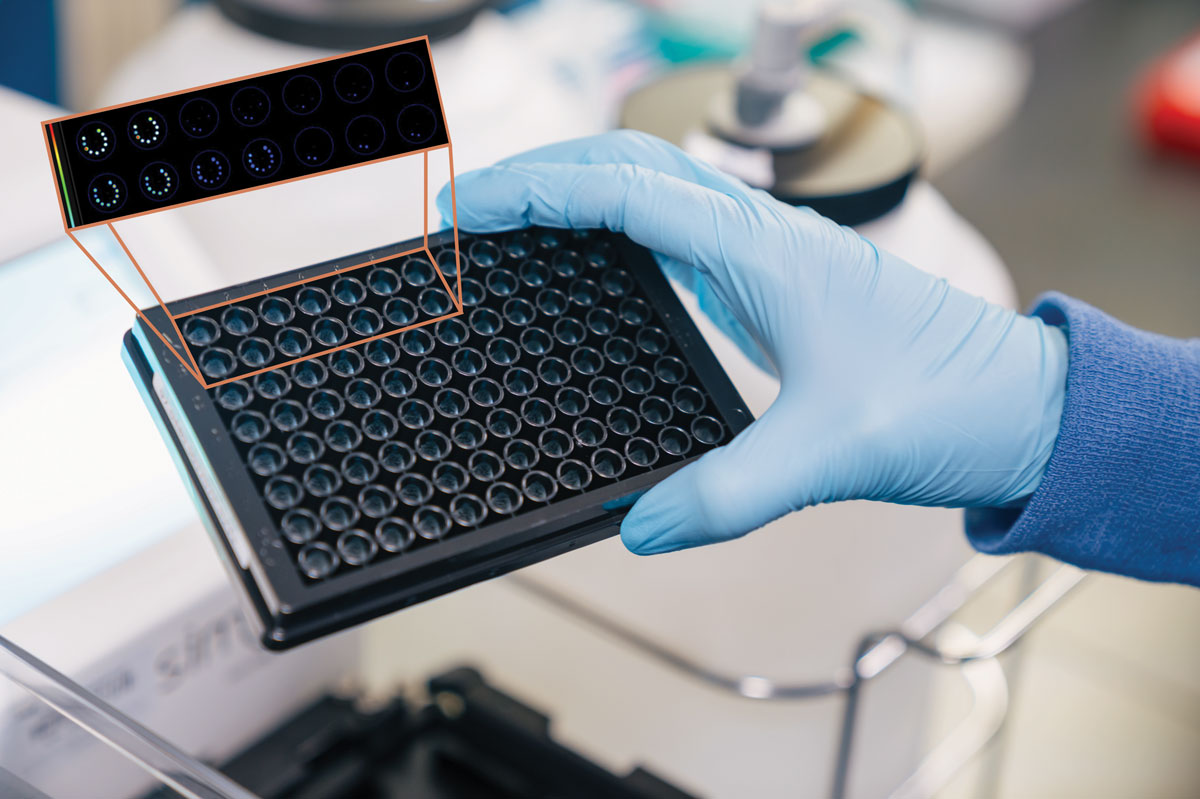
ARUP’s pTau test, Phospho-Tau 217, Plasma, applies a validated dual-cutoff approach to pTau 217 as a single analytically stable biomarker, enabling results to be stratified into three clinically meaningful categories aligned with current guideline principles, according to the paper. ARUP’s Test Fact Sheet provides detailed technical information about the test.
“Expanding the biomarker toolbox remains an ongoing effort,” said Doyle, not only at ARUP but beyond. While AD is the leading cause of dementia, many patients ultimately develop multiple forms of dementia, and no single tool can yet account for every type.
Blood‑based biomarkers such as plasma pTau 217 are helping to move AD evaluation to an earlier point, closer to primary care. By improving access to testing and offering high diagnostic performance, these tools have the potential to reshape how patients enter the diagnostic pathway.
More information about testing for AD is available on ARUP’s Laboratory Testing for Alzheimer’s Disease resource page and in the ARUP Consult® Alzheimer’s Disease topic.