
 Connect Sign In


The Evolution of a Selfish Scientist Into the People-First President of ARUP Laboratories’ Reference Business Unit


Ask colleagues to describe Adam Barker, PhD, and most won’t start with his title. They’ll start with a story. For Hunter Best, PhD, FACMG, head of the Molecular Division and medical director of Molecular Genetics and Genomics, that story begins 15 years ago, when Barker rode a bicycle through the halls of ARUP and nearly collided with then-Head of Clinical Pathology Harry Hill, MD, an ARUP cofounder.
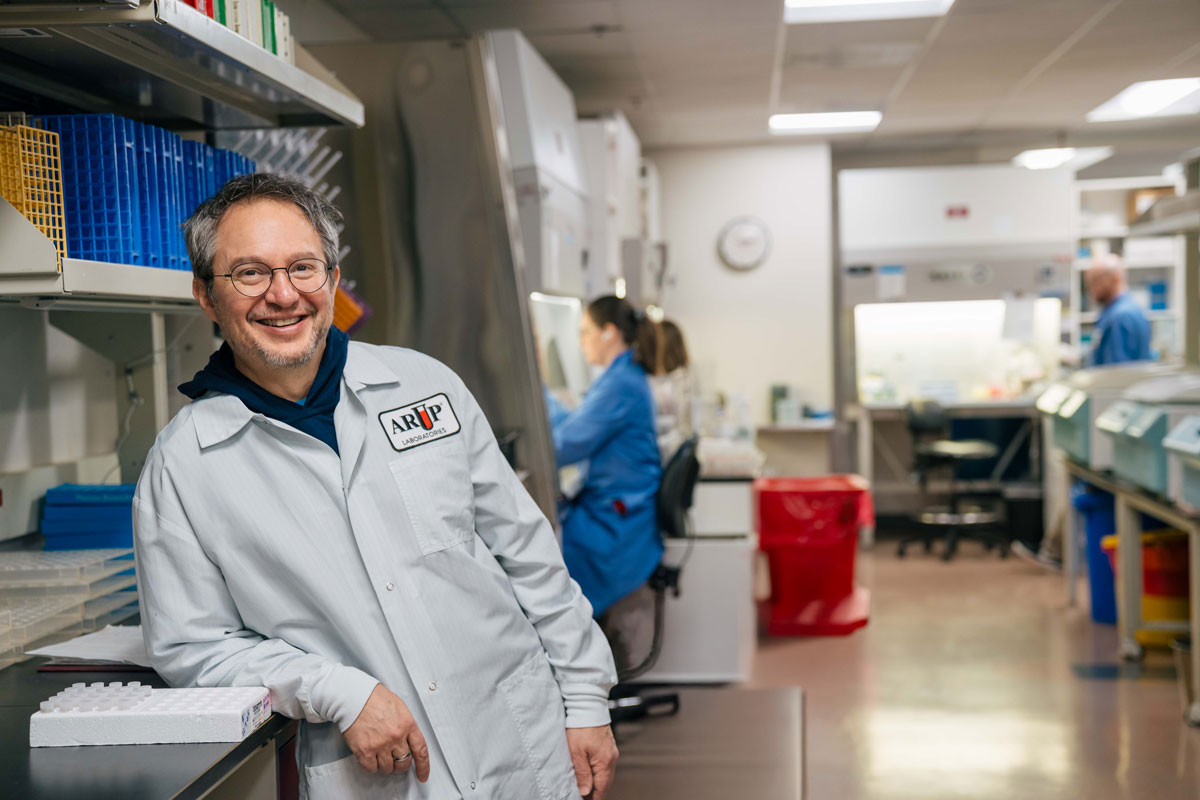
“I thought, ‘This fellow is going to be fired out of his training program,’” Best recalled.
Andy Theurer, CEO, remembers Barker at the time as kind of a mad scientist with wild hair and endless energy. Today, that same energy powers ARUP’s Reference Business Unit.
“The word ‘overwhelmed’ isn’t in his vocabulary,” Theurer said, describing Barker. “He looks at the impossible, and says, ‘No problem,’ with infectious energy that people can really get behind.”
What changed wasn’t the intensity, but how Barker channels his energy.
From the Bench to ARUP
Barker and his wife, Elke Jarboe, MD, moved to Utah in 2008 from Boston after she accepted a position as an anatomic pathologist in the Department of Pathology at the University of Utah. Barker had just completed a fellowship in microbiology and molecular genetics at Harvard University and began teaching advanced microbial genetics at the U.
“I hated it. I was not cut out to be a teacher doing labs all day with students,” he said.
Within a year, Barker planned to return to Boston, but Peter Jensen, MD, chair of the U Department of Pathology and the ARUP Board of Directors, encouraged him to apply for the microbiology fellowship at ARUP.
“He wanted my wife,” Barker said with a laugh. “And he said, ‘If I lose you, she might leave with you.’” Barker applied for the fellowship and joined ARUP in 2010. He soon found himself spending more time there than in his university lab. Eventually, he closed his academic lab entirely.
“I fell in love with ARUP, the people, and all the things that we were doing in infectious disease,” he said.
He also started falling for Utah, something the native Coloradan did not expect.
“I wouldn’t give Utah a fair shake for about 18 months, but then I realized I can ski 20 minutes from my house, enjoy really great food on the slopes, and it’s a great place to raise kids,” Barker explained.
That realization helped reshape his and Jarboe’s long-term plans. While they had originally decided not to have children, that changed.
“She came home one night, took me out to one of my favorite restaurants, and said, ‘I think we want to have kids,’ and they’ve been our lives ever since,” he said.
Today, Barker and Jarboe have a 14-year-old son named Anthony and a 12-year-old daughter named Claudia, both of whom attend the Madeleine Choir School in Salt Lake City. Family time includes touring with the children’s choirs, rescuing greyhounds, and a shared love of Disney theme parks, where Barker admits he once teared up watching his kids experience “Fantasmic” for the first time.
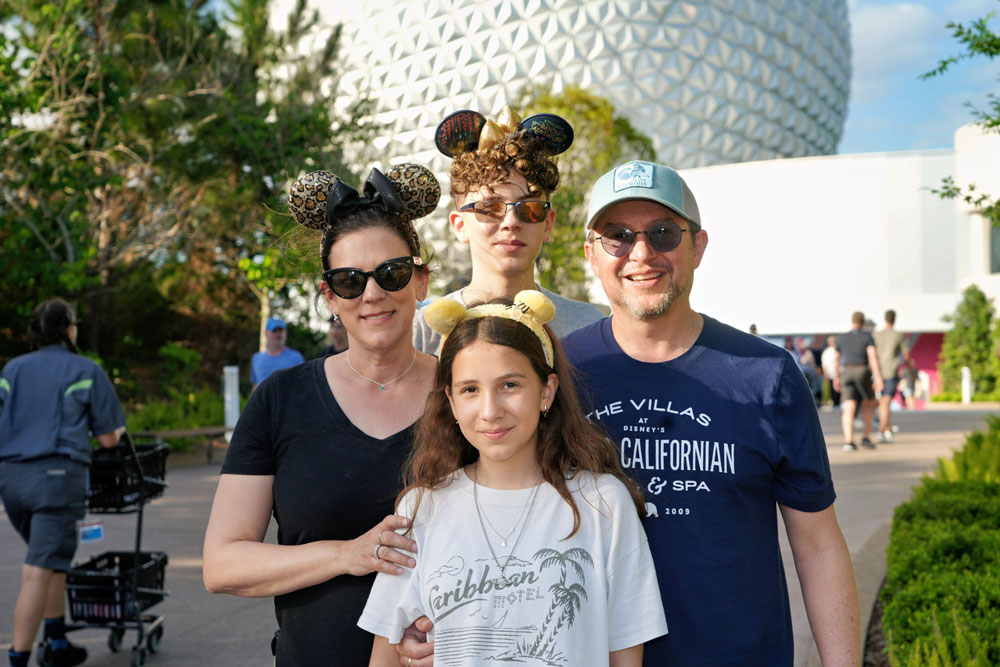
Barker said having children accelerated a transformation already underway. As a scientist, discovery was deeply personal. He recalled his years in Boston studying anthrax toxin, which included meticulous experiments and the thrill of being the only person in the world who knew something new.
“That’s why I did science,” he said. “When you find something out, it’s yours. No one can take that away from you.”
Leadership and parenthood required a different mindset. “My why is different now. It’s not about what I discover. It’s about what we can do for everyone,” Barker said.
Best has seen that evolution up close. In 2015, he and Barker started working together as coassociate directors of the ARUP Institute for Clinical and Experimental Pathology® (Research and Development), and they’ve worked closely ever since. “Adam sees the whole chessboard,” Best said. “He understands which dominoes have to fall to reach a strategic goal, and he’s willing to think years ahead to make that happen.”
Julio Delgado, MD, MS, vice chair and chief of the Division of Clinical Pathology and executive vice president of ARUP, recalled tasking Barker with insourcing sendout tests during Barker’s early years in R&D. Delgado described him as an executor.
“He organized the group because he can speak many languages of lab medicine, and he navigated some tricky politics,” Delgado said. “Now, he’s my best friend at ARUP, and I trust him implicitly.”
Relationship-building, strategic thinking, and the ability to complete projects quickly propelled Barker upward at ARUP. He served as director of R&D from 2017 to 2021, when he was named chief scientific officer.
Theurer said Barker’s leadership during the COVID-19 pandemic was key to enabling ARUP to quickly build capacity to meet demand for diagnostic testing.
In 2022, Barker was named COO.
“Most leaders understand either development or operations. Adam understands both; how a test is born, improved, and scaled,” Theurer explained.
Scaling the Reference Business Unit
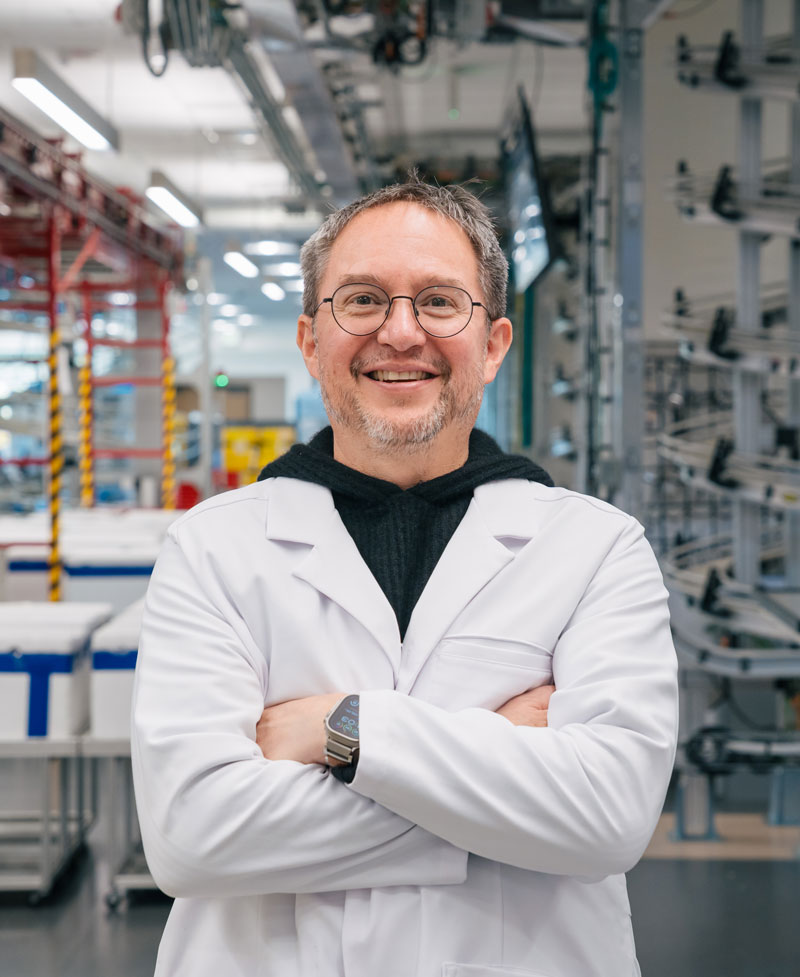
That understanding is key in Barker’s new role as president of ARUP’s Reference Business Unit, the core of the organization. This unit encompasses the entire menu of more than 3,000 reference tests and all the services that support testing operations, including Transportation, Specimen Processing, and Client Services. Barker also oversees Technical Operations, Automation, and the teams and systems required to support increasing test volumes and client expectations. Growth, Barker said, is encouraging and demanding.
“Our volumes are higher than they’ve ever been, and we need to keep up sustainably,” he said.
To meet the challenge, Barker is focused on automation and efficiency while remaining clear that technology alone isn’t the answer. Automation at ARUP won’t replace people, he said. Instead, it needs to improve workflows, increase capacity, and ensure employees can do their work safely and effectively as demand grows.
“In the past, we thought, automate, automate, automate,” said Barker. “Now, we’re very intentional. Every project is evaluated with our Improvement Engineering and Automation teams to ensure the workflow makes us more efficient and improves patient care.”
That balance between innovation and discipline led to the creation of the Strategic Planning Advancement and Alliance (SPAA) initiative, which is managed by a new Strategic Portfolio Office (SPO) and addresses a growing organizational reality: too many good ideas competing for time, resources, and people.
“When I started evaluating ARUP’s project list, we had hundreds of projects underway,” Barker said. “Everyone was doing great work, but we didn’t always have alignment.”
SPAA brings leaders together to establish shared priorities with a focus on transparency. The goal is to understand what each group is working on, where capacity exists, and what initiatives should move forward.
“It forces some tough conversations,” Barker said. “Sometimes it means stopping a project, even if it’s interesting or well loved.”
SPAA also creates space for long-term thinking. In addition to near‑term operational needs, the process allows leaders to identify higher‑risk, higher‑reward initiatives, which Barker calls “moonshots.” Not every project will succeed, but the organization learns from each attempt.
“As a scientist, 99.9% of everything is going to fail, but 0.1% will work, and that’s why you do it,” he said.
For Barker, margin and efficiency are not abstract financial concepts. They are directly tied to people.
“We have 5,000 employees, and many of them have families who depend on ARUP being stable and responsible,” he said.
The scientist who once waited days for a single experimental result now measures success by systems that work, teams that feel supported, and an organization prepared for what comes next.
“I was a selfish scientist,” Barker said. “And now, it’s come full circle.”
Today, his work is no longer about owning discovery. It’s about enabling employees, clinicians, and patients.
“All of the projects at ARUP are either to improve efficiency, support our patients, or to advance medicine,” Barker said. “It’s completely unselfish work.”
